
Gordon Brown- Former Prime Minister of the UK
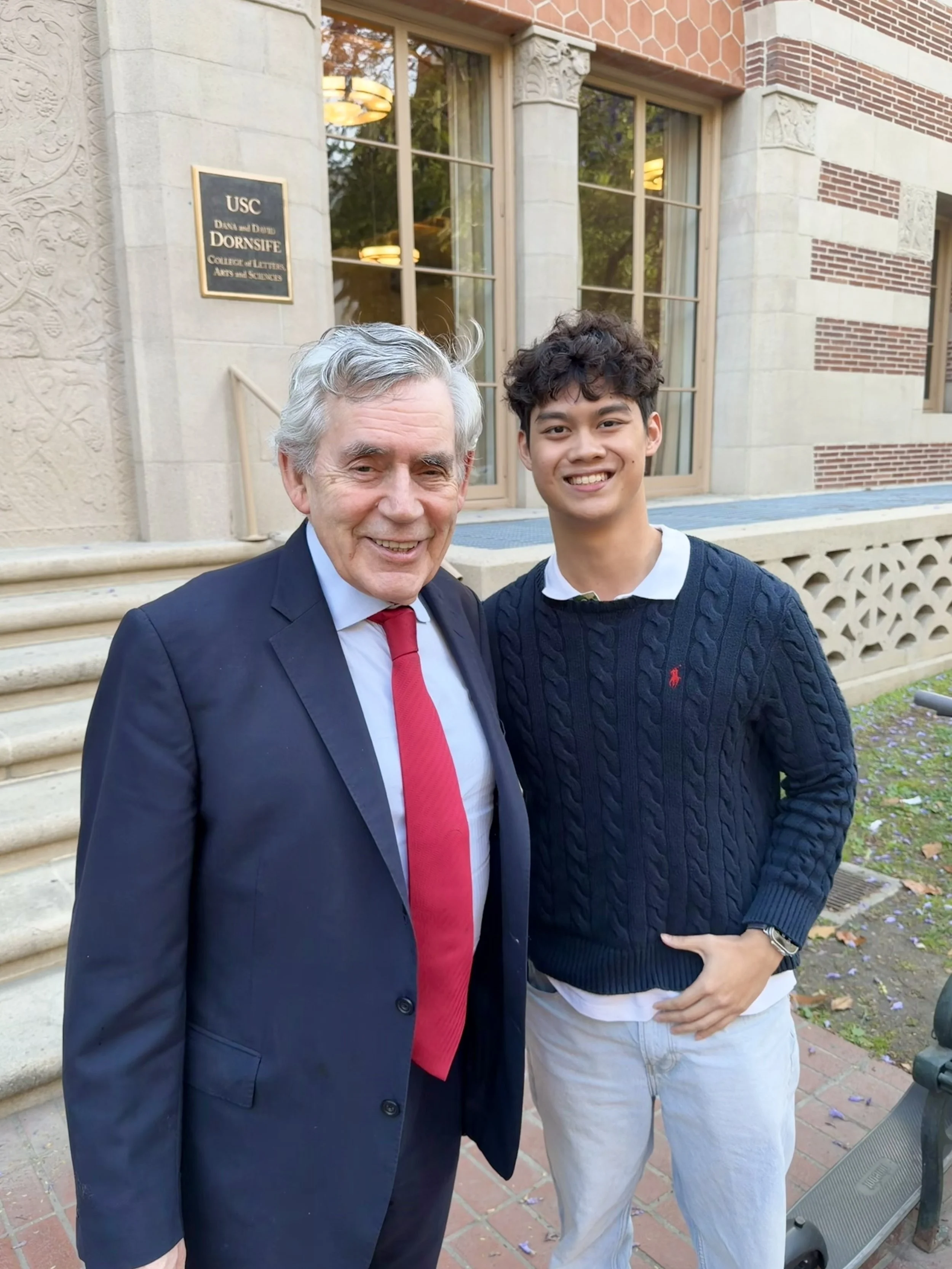
Learning from Gordon Brown
Tony had the opportunity to take the class “Case Studies of Modern Leadership” at the University of Southern California, a course taught by former UK Prime Minister Gordon Brown. You don’t often get to learn leadership from someone who has navigated global crises, worked directly with world leaders, and made decisions that shaped history in real time.
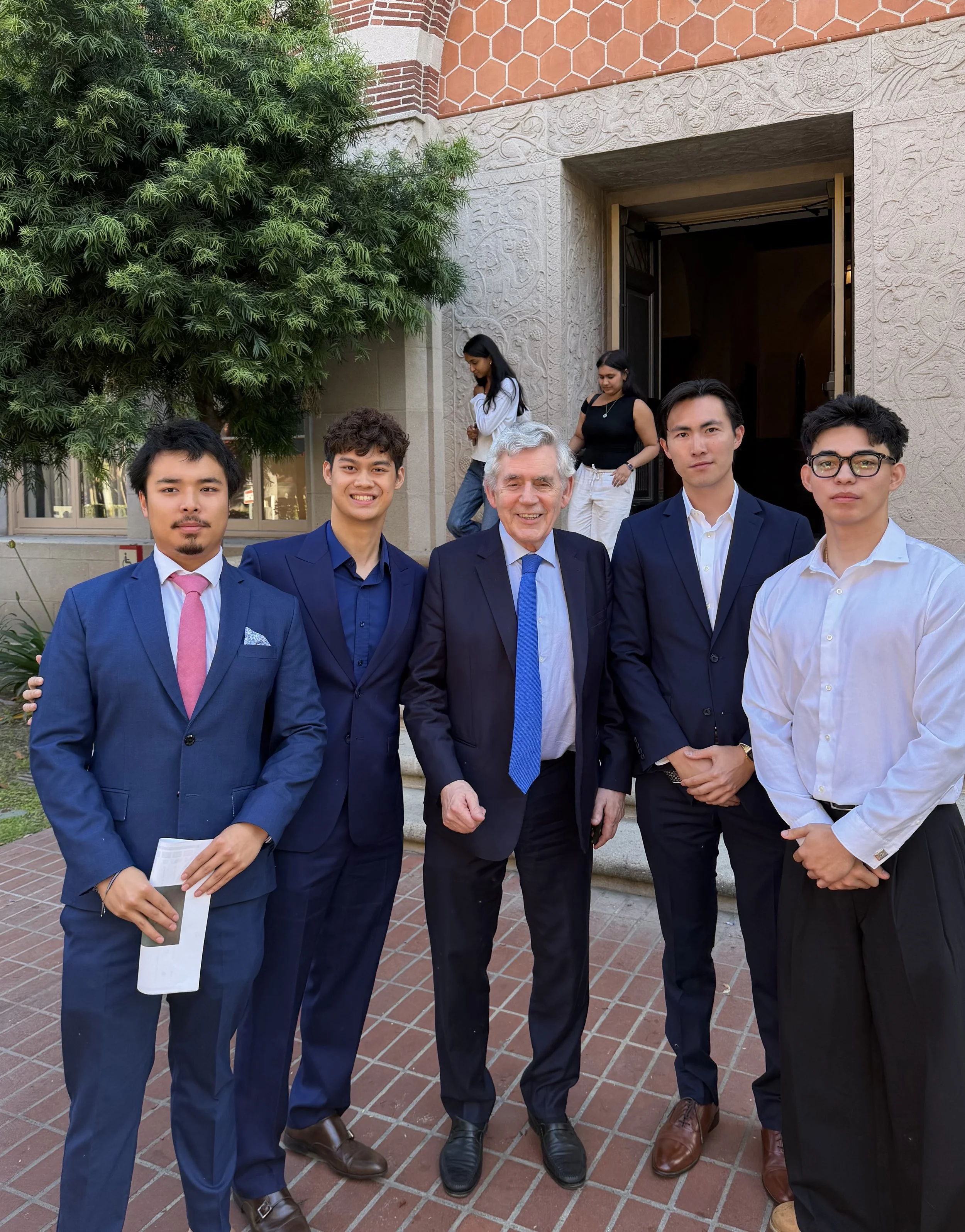
From Economic Architect to Prime Minister
Before becoming Prime Minister, Dr. Brown served as Chancellor of the Exchequer for ten years—the longest continuous tenure in modern UK history. In the UK, the role carries influence comparable to a vice president, especially in shaping national economic direction.
During that time, he helped drive a period of sustained economic growth in the UK. One of his most defining decisions was granting the Bank of England independence. The move fundamentally changed how monetary policy operates, allowing for greater stability and credibility in managing inflation and interest rates.
Notably, he served as Chancellor under Tony Blair. Tony Nguyen was named after Blair because of his charisma and leadership, making the experience of learning directly from Dr. Brown feel like a true full-circle moment.
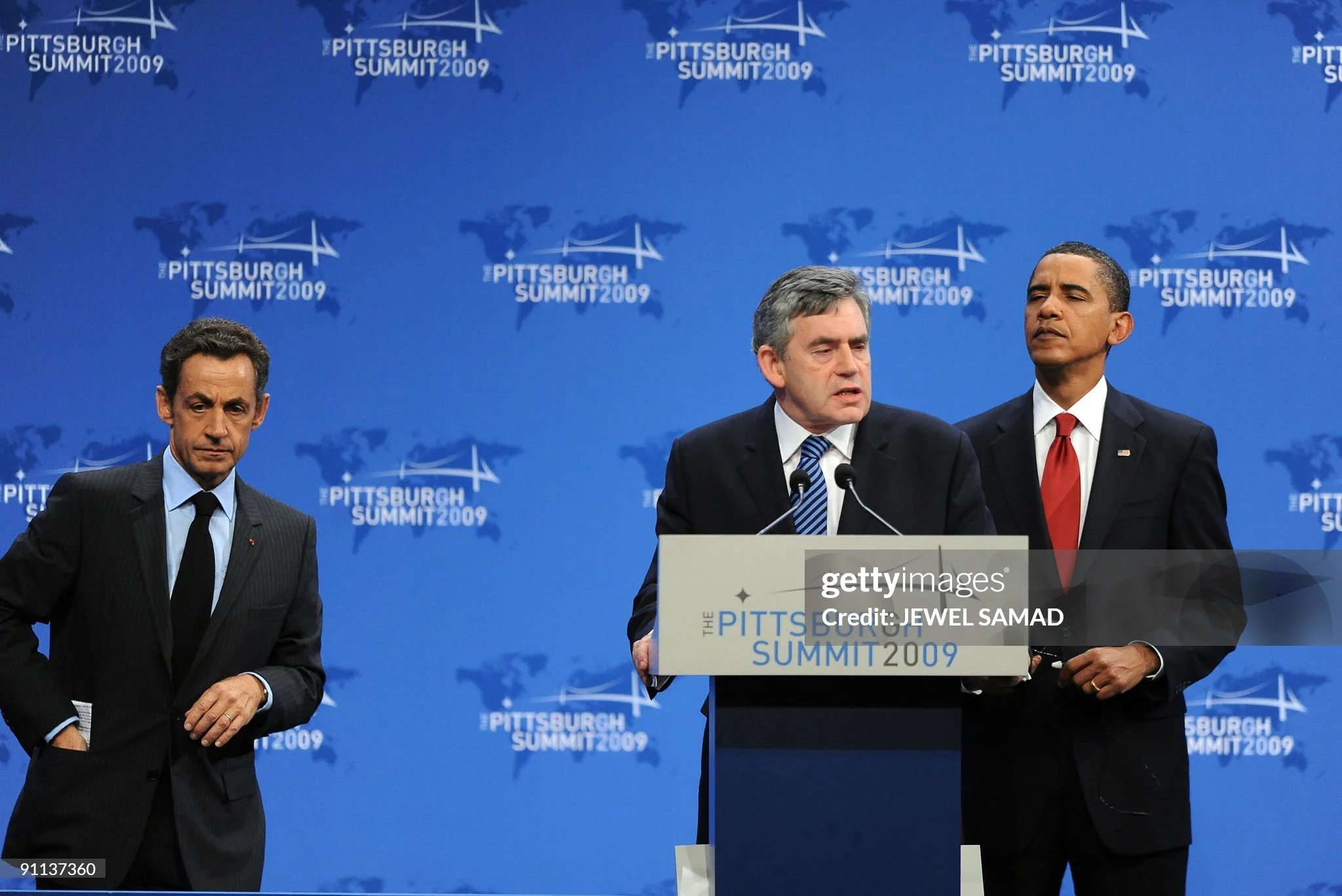
Dr. Brown (middle) speaking at the Pittsburgh Summit in 2009 with President Obama (right) and French President Nicolas Sarkozy (left)
Leading Through the Global Financial Crisis
Dr. Brown’s leadership became even more significant during the 2008 financial crisis. At a moment when global markets were collapsing and uncertainty dominated, he acted quickly and decisively.
He was among the first world leaders to implement large-scale bank recapitalization plans—injecting capital into financial institutions to prevent systemic collapse. This approach didn’t stay within the UK; it became a model adopted by countries around the world.
As Prime Minister, he also hosted the 2009 London Summit, bringing together global leaders to coordinate a unified economic response. He worked closely with figures like Barack Obama and other international leaders to align strategies during one of the most fragile moments in modern economic history.
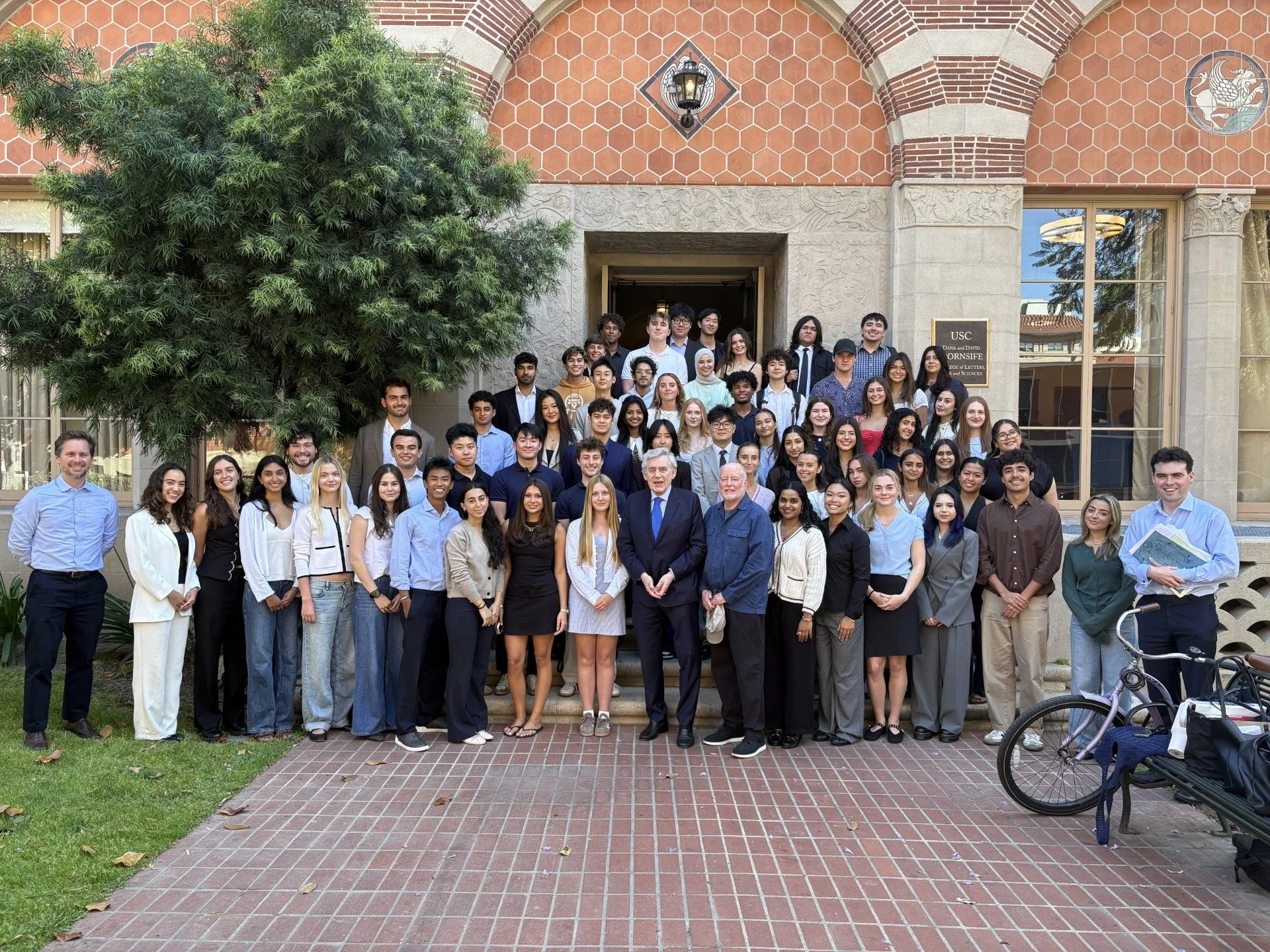
Lessons from Dr. Brown
While his accomplishments are remarkable, what stayed with Tony most were his perspectives on leadership itself.
One idea stood out clearly:
“You need a hopeful vision.”
In times of uncertainty, leadership isn’t just about reacting—it’s about giving people something to believe in.
Another key theme from his lectures was the shifting global landscape. He emphasized that we are moving:
From a rules-based world to a power-based world
From free trade to more protectionist policies
From a unipolar system to a multipolar one
In other words, decision-making is no longer concentrated in a single dominant power—it is increasingly distributed across multiple countries, each with its own priorities and influence.
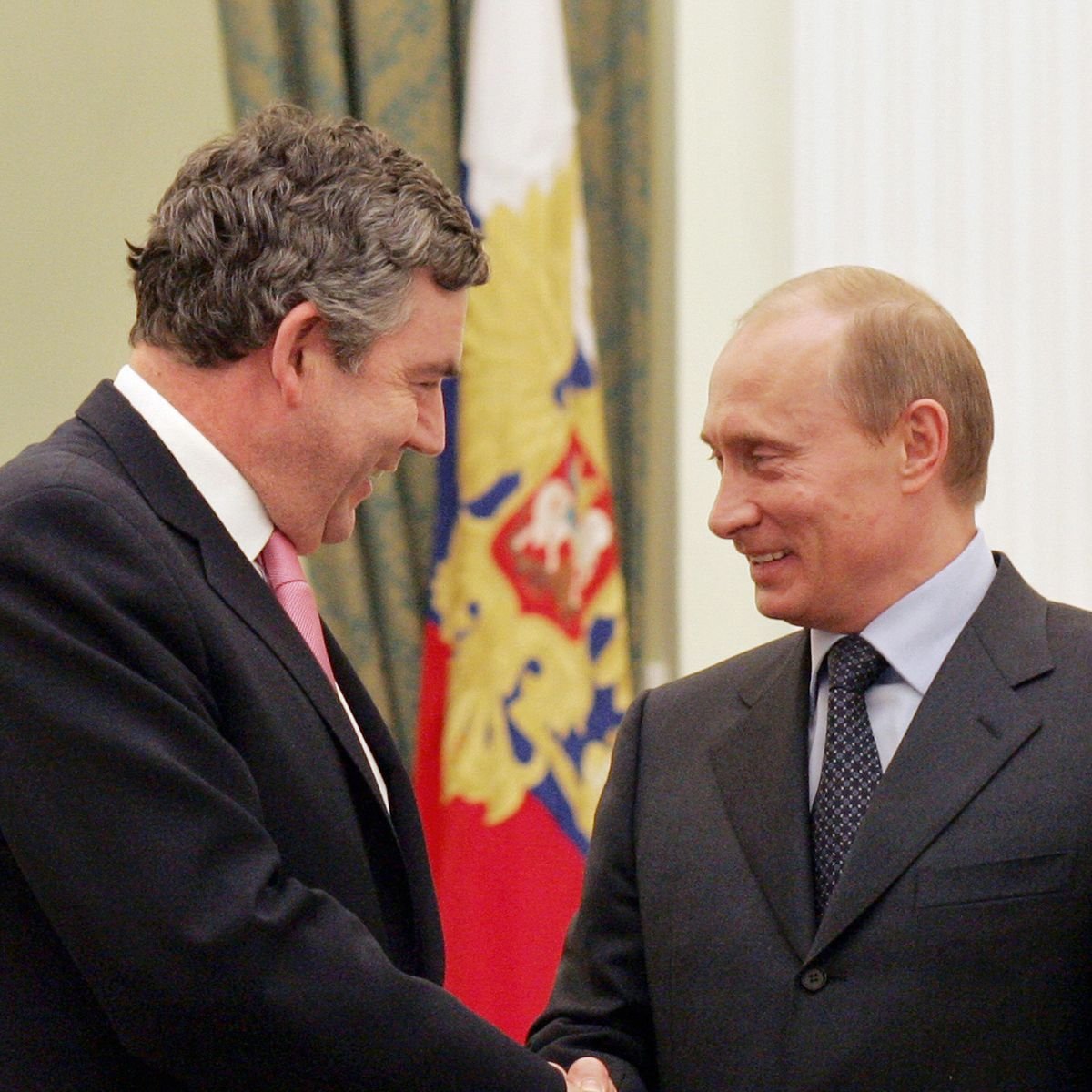
One of the most memorable stories from class was Dr. Brown’s firsthand encounter with Vladimir Putin at the Kremlin.
Dr. Brown recalled that from the moment the meeting began, Putin seemed intent on establishing psychological control. Upon entering, he was directed to a low, heavily cushioned chair that sank him down, while Putin sat noticeably higher across from him. The arrangement meant that throughout the conversation, Dr. Brown found himself looking up at the Russian leader, a display of dominance. Drawing on his background as a former KGB officer, Putin appeared well aware of the power of such psychological tactics. Dr. Brown also humorously remarked that Putin seemed considerably shorter in person than the 1.70-meter (5'7") height often listed on Wikipedia.
The psychological games did not end with the seating arrangement. According to Brown, Putin later produced a stack of index cards and began reciting remarkably detailed information about his personal life, family, and professional background. The gesture felt calculated. Brown described the experience as if Putin was attempting to demonstrate that he knew more about him than Brown knew about himself.
The story emphasized Putin's leadership style—one that relied not only on political power, but also on carefully crafted displays of control, preparation, and intimidation.
Meeting with Vladimir Putin

“Hope” (1886) by George Frederic Watts
A Story About Hope
In his final lecture, Dr. Brown began class by showing an image of the painting Hope (1886) by George Frederic Watts, before telling the story behind it.
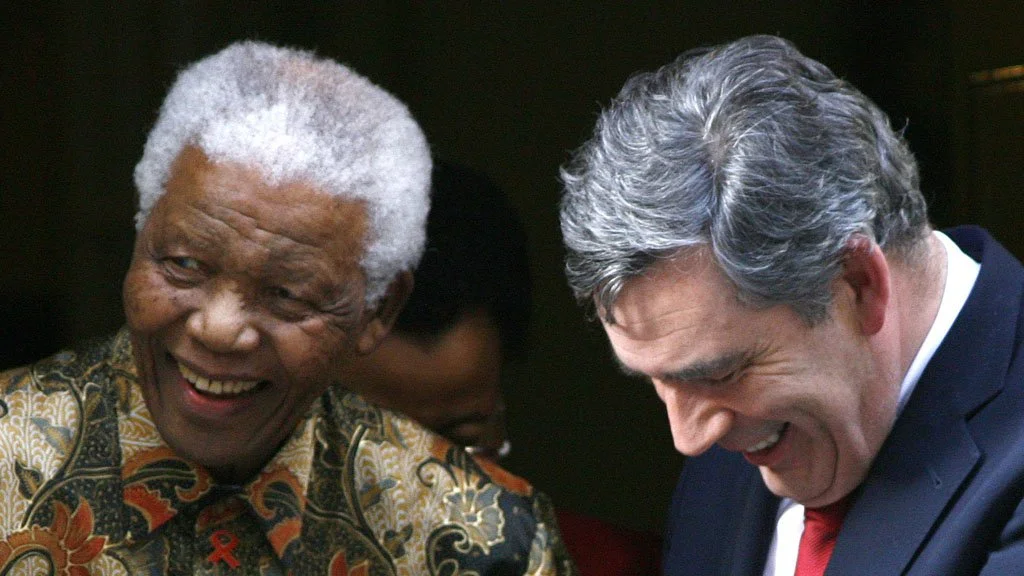
He then spoke about his time with Nelson Mandela, reflecting on Mandela’s years in prison. During that time, Mandela was allowed very few personal belongings. Yet among the few items he kept, one stood out: a small image of this very painting.
The painting Hope depicted a blindfolded figure playing a lyre with only one string remaining, symbolizing resilience in times of hopelessness. Dr. Brown discusses that Mandela kept a small picture of this art during his imprisonment. Mandela’s choice to hold onto that art symbolizes that even in the absence of freedom and in times of uncertainty, hope is not passive optimism but an active decision.
This lecture changed Tony’s perspective on global challenges and leadership. The structural changes in the world order that Dr. Brown outlined can often feel overwhelming. However, the story of hope reframes these issues. At their core, they are about people enduring uncertainty. It emphasizes that leadership is not just about reacting to crises but about offering a “hopeful vision that people can believe in, especially in times of uncertainty.”
“In times of hopelessness, have hope.”
—Gordon Brown